

How Tapered Compression Springs Enhance Mechanical Efficiency
Release Time:
2024-08-29
How Tapered Compression Springs Enhance Mechanical Efficiency Table of Contents 1. Introduction to Tapered Compression Springs 2. Design Advantages of Tapered Compression Springs 3. Understanding Mechanical Efficiency 4. Application Areas of Tapered Compression Springs 5. Material Considerations in Spring Manufacturing 6. Tapered Compression Springs vs. Regular Compression

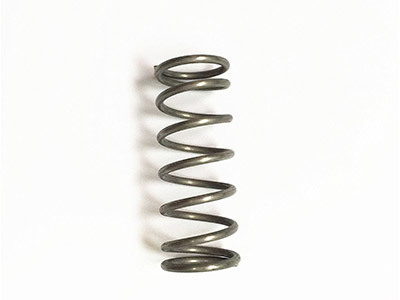
Tapered compression springs are specialized mechanical devices designed to provide resistance to compressive forces. Unlike traditional cylindrical springs, tapered springs feature a conical shape that enables them to compress more effectively, especially in constrained spaces. Their unique geometry allows for a progressive spring rate, which means the spring’s resistance increases as it compresses. This characteristic is particularly beneficial in applications where load variability is a factor.
In this article, we will delve into how tapered compression springs can significantly enhance mechanical efficiency, discussing their advantages, applications, and manufacturing processes.
Tapered compression springs come with several design advantages that contribute to their efficiency:
One of the key benefits of tapered compression springs is their ability to fit into compact spaces. Their conical shape allows for a reduced height in compressed states, making them ideal for applications where space is limited.
Another significant advantage is the progressive spring rate. As the spring compresses, the coils closest to the center bear more load, allowing the spring to absorb shocks and vibrations more effectively. This feature enhances the overall mechanical performance of the system.
Tapered springs distribute loads more evenly across their coils compared to traditional springs. This uniform load distribution can lead to longer service life and reduced risk of failure.
Mechanical efficiency refers to the effectiveness with which a mechanical system converts input energy into useful work. In the context of springs, efficiency can be defined by how well a spring performs its intended function without wasting energy through heat or material fatigue.
Springs are crucial components in various mechanical systems, serving to absorb shocks, store energy, and maintain tension. Tapered compression springs, due to their unique design, can enhance the overall efficiency of these systems by providing smoother operation and better load management.
Related News
Contact Us
E-mail:
WhatsAPP:
Address:
Wen 'an Industrial New Area (small Farm), Langfang, Hebei, China