

Understanding the Role of Conical Compression Springs in Mechanical Design
Release Time:
2024-08-07
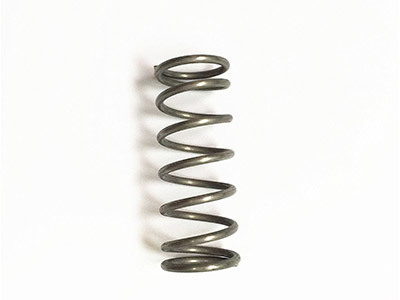
Conical compression springs are a specialized type of spring characterized by their tapering shape. Unlike traditional cylindrical springs, these springs possess a conical form that allows them to compress evenly while providing significant load-bearing capacity. **Understanding their role in mechanical design** is crucial for engineers and designers who aim to enhance the functionality and reliability of their mechanical systems.

Conical compression springs are a specialized type of spring characterized by their tapering shape. Unlike traditional cylindrical springs, these springs possess a conical form that allows them to compress evenly while providing significant load-bearing capacity. Understanding their role in mechanical design is crucial for engineers and designers who aim to enhance the functionality and reliability of their mechanical systems.
Conical compression springs are designed to alleviate stress and strain in various applications. Their unique geometry allows them to occupy less space than conventional springs, making them ideal for compact mechanical assemblies. This article will explore the essential aspects of conical compression springs, focusing on their mechanical properties, design considerations, applications, advantages, challenges, maintenance, and future trends.
The mechanical properties of conical compression springs are what make them particularly advantageous in various applications. Their properties include:
Conical compression springs can withstand varying degrees of load due to their tapered structure. The larger diameter provides greater strength under compression, allowing the spring to handle heavier loads without deformation.
The conical design allows these springs to be more compact than traditional cylindrical springs. This space efficiency is essential in applications where size constraints are a significant concern, such as in aerospace and automotive industries.
One of the critical benefits of conical compression springs is their ability to distribute load linearly. This characteristic minimizes the risk of buckling and enhances overall stability, making them ideal for dynamic applications.
Conical springs offer controlled deflection characteristics, which means they can be designed to compress to a specific distance under load. This predictability is crucial in applications where precise movement or positioning is required.
When designing conical compression springs, several factors must be considered to ensure optimal performance and reliability.
The choice of material plays a significant role in the spring’s performance. Common materials include stainless steel, carbon steel, and alloy steels, each offering unique mechanical properties and resistance to environmental factors such as corrosion and fatigue.
The dimensions of the spring, including the base and top diameters, wire diameter, and overall height, must be carefully calculated to achieve the desired performance characteristics. Engineers often use formulas to ascertain the spring constants needed for specific applications.
Proper heat treatment processes can enhance the mechanical properties of conical compression springs, improving their strength and fatigue resistance. This process often involves tempering and hardening to achieve the desired material characteristics.
Different end types may be employed based on the application requirements. Options include closed and ground ends, open ends, and various configurations that enhance the spring’s ability to engage with other components effectively.
Related News
Contact Us
E-mail:
WhatsAPP:
Address:
Wen 'an Industrial New Area (small Farm), Langfang, Hebei, China