


Understanding compression of the spring: Key Insights for Professionals in Manufacturing
Release Time:
2024-08-06
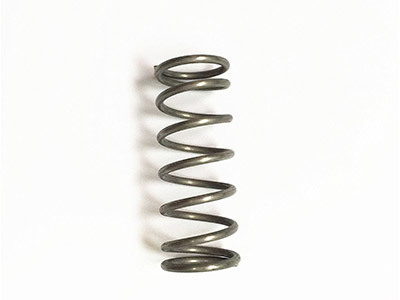
When discussing "compression of the spring," it's essential to understand that springs are mechanical devices designed to store energy and release it when needed. Compression springs, in particular, are widely utilized in various applications, from automotive to industrial machinery. The act of compressing a spring involves applying force to reduce its length, which ultimately stores potential ene

When discussing "compression of the spring," it's essential to understand that springs are mechanical devices designed to store energy and release it when needed. Compression springs, in particular, are widely utilized in various applications, from automotive to industrial machinery. The act of compressing a spring involves applying force to reduce its length, which ultimately stores potential energy within the spring.
The relationship between the applied force and the compression of a spring is described by Hooke's Law, which states that the force exerted by a spring is directly proportional to its displacement from its original position. Mathematically, this can be represented as F = kx, where F is the force applied, k is the spring constant, and x is the displacement or compression. Understanding this relationship is crucial for professionals in the manufacturing sector, as it determines how much load a spring can handle before yielding or deforming.
In practical applications, the compression of the spring must be carefully considered during the design and manufacturing stages. Different materials, such as stainless steel or music wire, offer varying levels of elasticity and fatigue resistance, which can affect the spring's performance under compression. This is particularly important in applications where springs experience repeated compression cycles, as fatigue failure can occur over time if the material is not adequately selected.
Furthermore, when designing compression springs, factors such as the coil diameter, wire diameter, and number of active coils play a significant role in determining the spring's overall performance under load. Engineers often use specialized software to simulate and calculate the behavior of compression springs under different loading conditions, ensuring that they meet the desired specifications.
In addition to mechanical considerations, it’s important to understand the role of compression springs in various industries. For instance, in automotive applications, compression springs are used in shock absorbers, providing a smoother ride by absorbing bumps and impacts. In machinery, they are often employed in mechanisms that require controlled motion, such as clutches and brakes.
Overall, the compression of springs is a vital concept in the manufacturing of compression springs. By understanding the mechanics behind spring compression, material selection, and design considerations, professionals can enhance the performance and longevity of springs in their applications. As technology advances, staying informed about the latest developments in spring design and manufacturing processes will continue to be essential for industry professionals.
Related News
Contact Us
E-mail:
WhatsAPP:
Address:
Wen 'an Industrial New Area (small Farm), Langfang, Hebei, China