


Understanding the Importance of compression of the spring in Mechanical Engineering
Release Time:
2024-08-03
In the realm of mechanical engineering, compression of the spring plays a pivotal role in numerous applications. Springs are not only fundamental components but also integral to the functionality of many mechanical systems. They provide the necessary force, flexibility, and resilience that support various mechanical functions, from absorbing shock to allowing precise movements.

In the realm of mechanical engineering, compression of the spring plays a pivotal role in numerous applications. Springs are not only fundamental components but also integral to the functionality of many mechanical systems. They provide the necessary force, flexibility, and resilience that support various mechanical functions, from absorbing shock to allowing precise movements.
Understanding compression of the spring is essential for engineers who design and work on mechanical systems. This knowledge helps in selecting the right type of spring for specific applications and ensures optimal performance. Our exploration will provide insights into the mechanics of spring compression, its widespread applications, and the importance of proper design and testing.
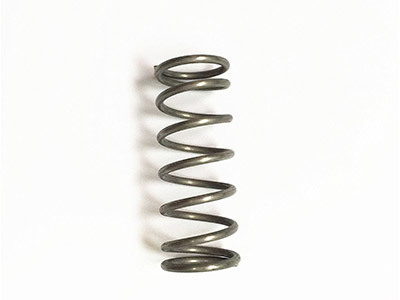
compression of the spring are helical springs designed to resist compressive forces. Unlike tension springs, which are designed to extend, compression springs are built to be compressed. They are typically cylindrical and can come in various shapes, including conical or barrel-shaped. The primary function of these springs is to store energy and provide resistance to any compressive load applied to them.
The performance of compression springs is determined by several factors, including:
The mechanics of spring compression are rooted in Hooke's Law, which states that the force exerted by a spring is directly proportional to its displacement within its elastic limit. Mathematically, this can be expressed as:
Understanding how force, displacement, and energy relate in compression of the spring allows engineers to predict performance under different loads and conditions.
compression of the spring are ubiquitous across numerous industries, owing to their versatility and reliability. Here are some key applications:
In the automotive sector, compression springs are integral to suspension systems, providing shock absorption and enhancing ride quality. They are also used in various components, including clutch mechanisms and engine valves.
In aerospace, compression springs are essential for control systems and landing gear mechanisms. They help absorb impact and provide reliable functionality in critical applications.
Many consumer electronics rely on compression springs for buttons and switches, ensuring tactile feedback and durability in everyday devices.
Related News
Contact Us
E-mail:
WhatsAPP:
Address:
Wen 'an Industrial New Area (small Farm), Langfang, Hebei, China