

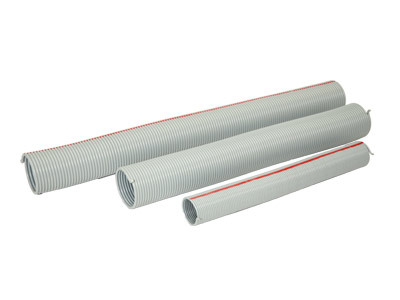

Understanding Compression in Springs: Key Concepts for Professionals
Release Time:
2024-08-02
Compression in springs is a crucial topic for professionals in manufacturing and mechanical engineering, particularly when working with compression springs. These springs are designed to resist compressive forces and are commonly used in a variety of applications. Understanding the mechanics behind compression in springs can enhance product design and improve operational efficiency. Compressio

Compression in springs is a crucial topic for professionals in manufacturing and mechanical engineering, particularly when working with compression springs. These springs are designed to resist compressive forces and are commonly used in a variety of applications. Understanding the mechanics behind compression in springs can enhance product design and improve operational efficiency.
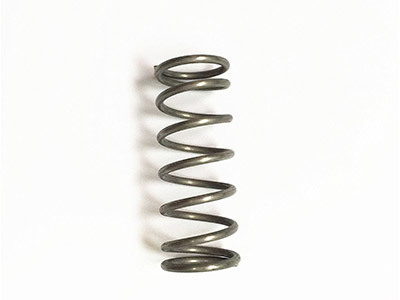
Compression springs operate on the principle of storing energy when compressed. When a force is applied to the spring, it compresses, storing potential energy that is released when the force is removed. The amount of compression is determined by the spring's design, including its material, wire diameter, coil diameter, and the number of active coils. These factors influence the spring constant, a critical parameter that defines how much force is needed for a given amount of compression.
There are several key factors to consider regarding compression in springs. The first is the material used to manufacture the spring. Common materials include stainless steel, music wire, and various alloys, each offering unique properties that affect the spring's strength, elasticity, and fatigue resistance. The choice of material can significantly impact the performance of the spring in practical applications.
Another important aspect is the design of the spring itself. Compression springs can come in various shapes and forms, including cylindrical, conical, and barrel-shaped. The geometry of the spring plays a vital role in how it behaves under load. For instance, a conical compression spring can provide a progressive spring rate, meaning that its resistance to compression increases as it is compressed further, which can be beneficial in applications requiring varying levels of force.
When discussing compression in springs, it is also essential to consider the spring's operational environment. Factors such as temperature, exposure to corrosive elements, and cyclical loads can affect the performance and lifespan of the spring. For example, high temperatures may alter the material properties and lead to premature failure, while corrosive environments can degrade the spring's integrity over time.
Maintenance and proper handling are also critical in ensuring the efficient performance of compression springs. Regular inspections can help identify wear and fatigue, preventing unexpected failures in machinery and equipment.
In conclusion, understanding compression in springs is vital for professionals involved in manufacturing and mechanical design. By considering the material, design, and operational factors, engineers can optimize spring performance for various applications, ensuring reliability and efficiency in their projects. Knowledge of these principles can lead to more effective product designs and superior mechanical systems.
Related News
Contact Us
E-mail:
WhatsAPP:
Address:
Wen 'an Industrial New Area (small Farm), Langfang, Hebei, China