

Understanding Axial Torsion Springs: Applications and Benefits in Mechanical Manufacturing
Release Time:
2025-12-18
Axial torsion springs are a specialized type of spring designed to store and release energy through rotational movement. Unlike traditional coil springs, which operate on the principle of linear compression or tension, axial torsion springs are engineered to work under a twisting action. This unique functionality makes them essential in various applications within the manufacturing and mechanical

Axial torsion springs are a specialized type of spring designed to store and release energy through rotational movement. Unlike traditional coil springs, which operate on the principle of linear compression or tension, axial torsion springs are engineered to work under a twisting action. This unique functionality makes them essential in various applications within the manufacturing and mechanical processing industries.
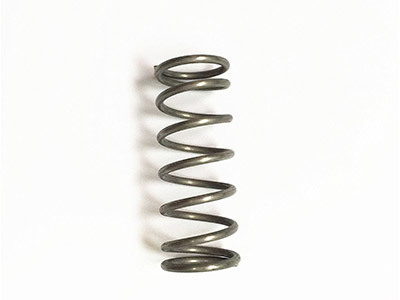
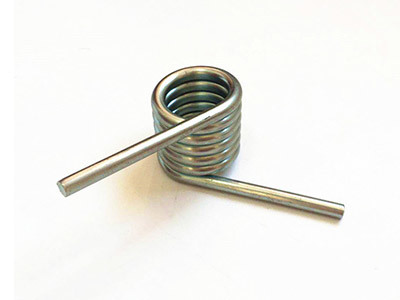
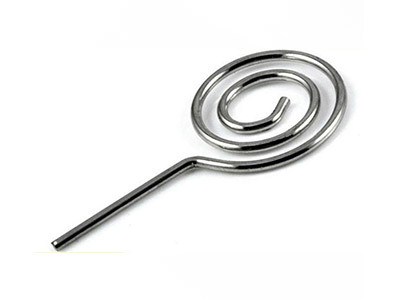
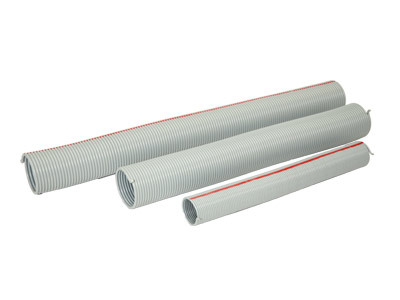
The design of an axial torsion spring typically consists of a wire wound in a cylindrical shape, allowing for efficient storage of potential energy when twisted. When a force is applied to the spring, it twists along its axis, creating a torque that can be harnessed for various mechanical functions. This property is particularly advantageous in applications where space is limited, and a compact solution is required.
One of the primary advantages of axial torsion springs is their ability to provide controlled resistance. This makes them ideal for mechanisms that require precise motion, such as in automotive components, industrial machinery, and consumer products. For instance, in automotive applications, axial torsion springs are commonly found in mechanisms like door hinges and latches, enabling smooth operation and enhanced durability.
Moreover, the load-bearing capacity of axial torsion springs can be tailored to meet specific requirements, making them versatile for different applications. Manufacturers can customize these springs in terms of wire diameter, coil count, and material, allowing them to achieve the desired performance characteristics. Typically, high-quality materials such as stainless steel, music wire, or oil-tempered steel are used, ensuring longevity and reliability even under repetitive stress.
Another significant benefit of axial torsion springs is their cost-effectiveness in production. Compared to other types of springs, the manufacturing process is relatively straightforward, which can lead to reduced production costs without compromising quality. This efficiency is particularly valuable in large-scale manufacturing environments where maintaining budget constraints is essential.
In conclusion, axial torsion springs play a crucial role in various mechanical applications, providing unique solutions for energy storage and controlled movement. Their ability to adapt to different design specifications makes them a popular choice for engineers and manufacturers looking to optimize mechanical performance. Understanding the functionality and advantages of these springs is essential for professionals in the manufacturing and machining sectors, enabling them to implement effective solutions that enhance product performance and efficiency. By leveraging the characteristics of axial torsion springs, industries can innovate and improve their equipment, ultimately leading to better productivity and reliability in their operations.
The design of an axial torsion spring typically consists of a wire wound in a cylindrical shape, allowing for efficient storage of potential energy when twisted. When a force is applied to the spring, it twists along its axis, creating a torque that can be harnessed for various mechanical functions. This property is particularly advantageous in applications where space is limited, and a compact solution is required.
One of the primary advantages of axial torsion springs is their ability to provide controlled resistance. This makes them ideal for mechanisms that require precise motion, such as in automotive components, industrial machinery, and consumer products. For instance, in automotive applications, axial torsion springs are commonly found in mechanisms like door hinges and latches, enabling smooth operation and enhanced durability.
Moreover, the load-bearing capacity of axial torsion springs can be tailored to meet specific requirements, making them versatile for different applications. Manufacturers can customize these springs in terms of wire diameter, coil count, and material, allowing them to achieve the desired performance characteristics. Typically, high-quality materials such as stainless steel, music wire, or oil-tempered steel are used, ensuring longevity and reliability even under repetitive stress.
Another significant benefit of axial torsion springs is their cost-effectiveness in production. Compared to other types of springs, the manufacturing process is relatively straightforward, which can lead to reduced production costs without compromising quality. This efficiency is particularly valuable in large-scale manufacturing environments where maintaining budget constraints is essential.
In conclusion, axial torsion springs play a crucial role in various mechanical applications, providing unique solutions for energy storage and controlled movement. Their ability to adapt to different design specifications makes them a popular choice for engineers and manufacturers looking to optimize mechanical performance. Understanding the functionality and advantages of these springs is essential for professionals in the manufacturing and machining sectors, enabling them to implement effective solutions that enhance product performance and efficiency. By leveraging the characteristics of axial torsion springs, industries can innovate and improve their equipment, ultimately leading to better productivity and reliability in their operations.
Related News
Contact Us
E-mail:
WhatsAPP:
Address:
Wen 'an Industrial New Area (small Farm), Langfang, Hebei, China