


Understanding Compression in Springs: The Mechanics Behind Compression Springs
Release Time:
2024-07-31
Compression springs are a vital component in numerous mechanical applications, providing resistance against compressive forces. These springs are designed to store energy and then release it when the force is removed, making them essential in a wide range of devices—from everyday items like pens and mattresses to complex machinery in manufacturing. The basic principle of compression in springs rev

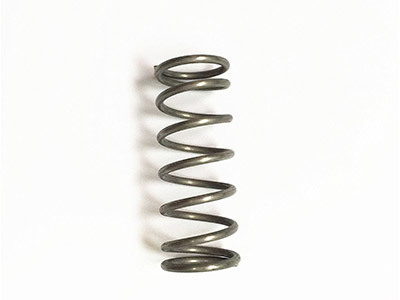
Compression springs are a vital component in numerous mechanical applications, providing resistance against compressive forces. These springs are designed to store energy and then release it when the force is removed, making them essential in a wide range of devices—from everyday items like pens and mattresses to complex machinery in manufacturing.
The basic principle of compression in springs revolves around Hooke's Law, which states that the force exerted by a spring is proportional to its displacement from the rest position. In the case of a compression spring, when a load is applied, the spring compresses, storing potential energy that can be released when the load is removed. This relationship between force and displacement is crucial for understanding how compression springs function in various applications.
One key aspect of compression springs is their design. They are typically cylindrical and are made from materials like steel or other alloys that can withstand repeated loading and unloading without permanent deformation. The diameter, wire thickness, and number of coils in a compression spring can be tailored to meet specific force and deflection requirements, making them versatile components in mechanical design.
Compression springs are commonly utilized in various industries due to their reliability and efficiency. For instance, in automotive applications, they are used in suspension systems to absorb shocks and maintain vehicle stability. In electronics, compression springs can be found in switches and connectors, ensuring proper contact and function. Their ability to maintain performance under varying conditions makes them an asset in applications where durability is critical.
In manufacturing processes, understanding the mechanics of compression is essential for selecting the right type of spring for specific applications. Engineers and designers often need to calculate the required spring rate—the amount of force needed to compress the spring a certain distance. This value is crucial for designing components that rely on precise movements and forces.
Moreover, the behavior of compression springs can be influenced by factors such as temperature changes and material fatigue. It's important for engineers to consider these factors when designing systems that incorporate compression springs, ensuring they remain functional over time.
Overall, the study of compression in springs reveals the intricate mechanics and design considerations that make compression springs an indispensable part of modern manufacturing and engineering. By leveraging their unique properties, engineers can create more efficient and reliable systems across a multitude of industries.
Related News
Contact Us
E-mail:
WhatsAPP:
Address:
Wen 'an Industrial New Area (small Farm), Langfang, Hebei, China