

Understanding the Role of Compression in Spring Manufacturing: A Comprehensive Guide for Engineers
Release Time:
2024-07-30
Compression springs are mechanical devices designed to resist compressive forces. They play a pivotal role in various applications, from automotive suspensions to industrial machinery, where they store and release energy. Understanding how compression affects the performance and design of these springs is essential for engineers and manufacturers alike.

Compression springs are mechanical devices designed to resist compressive forces. They play a pivotal role in various applications, from automotive suspensions to industrial machinery, where they store and release energy. Understanding how compression affects the performance and design of these springs is essential for engineers and manufacturers alike.
Compression springs operate on a simple yet profound principle: when a force is applied to compress the spring, it stores potential energy. This energy is released when the force is removed, allowing the spring to return to its original shape. The ability of a spring to effectively store and release energy under compression is influenced by several factors, including the material's elasticity, the spring's geometry, and the amount of force applied.
One fundamental concept that governs the behavior of compression springs is **Hooke's Law**, which states that the force exerted by the spring is directly proportional to its displacement within the elastic limit. This relationship is crucial when designing springs for specific applications, as it allows engineers to predict the spring's behavior under various loads.
Compression springs come in various designs, each suited for specific applications. The most common types include:
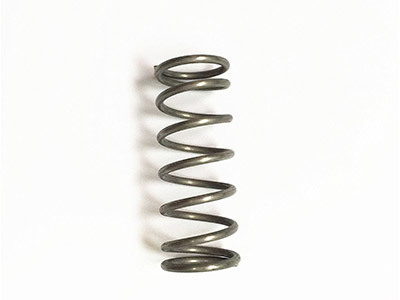
Open coiled compression springs have a larger gap between coils, allowing for greater movement. They are often used in applications where reduced friction is essential.
Closed coiled springs have tightly wound coils, which provide higher resistance to compression. They are commonly used in automotive and industrial applications.
These springs taper towards one end, providing progressive resistance. Conical springs are often used in scenarios requiring variable stiffness.
Rectangular springs are designed to fit specific applications where space constraints are an issue. Their unique shape allows for efficient energy storage in tight environments.
The manufacturing of compression springs involves several critical steps that ensure the final product meets both performance and design specifications.
Related News
Contact Us
E-mail:
WhatsAPP:
Address:
Wen 'an Industrial New Area (small Farm), Langfang, Hebei, China