

Unlocking the Potential of Compression Springs: A Guide to Selecting the Best Options for Your Manufacturing Needs
Release Time:
2025-06-15
Compression springs are essential components in various mechanical applications, providing resistance to compressive forces. Understanding how to select the best compression spring for your manufacturing needs can greatly enhance the performance of your products. Here are some practical insights and considerations to help you make an informed decision. ### Material Selection One of the first facto

Compression springs are essential components in various mechanical applications, providing resistance to compressive forces. Understanding how to select the best compression spring for your manufacturing needs can greatly enhance the performance of your products. Here are some practical insights and considerations to help you make an informed decision.
### Material Selection
One of the first factors to consider when looking for the best compression spring is the material. The most common materials include music wire, oil-tempered wire, stainless steel, and plastic. Each material has unique properties that affect the spring's strength, elasticity, and corrosion resistance. For example, stainless steel springs are ideal for harsh environments due to their excellent corrosion resistance, while oil-tempered wire springs provide high fatigue strength at a lower cost.
### Spring Design and Specifications
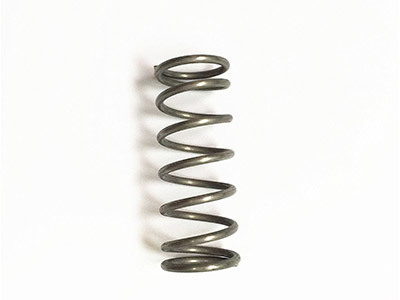
The design of a compression spring significantly impacts its functionality. Key specifications to evaluate include wire diameter, spring diameter, total coils, and free length. The wire diameter directly influences the load capacity and deflection characteristics of the spring. A thicker wire can withstand higher loads, but it will also increase the spring's stiffness. It's crucial to balance these factors while designing the best compression spring for your specific application.
### Load and Deflection Calculations
Understanding the load requirements of your application is vital. The best compression spring must be able to handle the expected load without permanent deformation. Calculate the spring's deflection under load to ensure it performs effectively within its operational limits. Utilizing formulas and spring calculators can aid in determining the appropriate dimensions to meet your needs.
### Manufacturing Techniques
The manufacturing process used to create compression springs can also affect their performance. Techniques such as coiling, heat treatment, and surface finishing play a significant role in the spring's longevity and effectiveness. Opting for springs manufactured with precision techniques ensures that you receive quality products that meet industry standards.
### Quality Assurance
Finally, quality assurance is paramount when selecting the best compression springs. Ensure that the manufacturer adheres to strict quality control measures, including testing for fatigue life, load capacity, and dimensional accuracy. Look for certifications that verify the quality of the springs, as this can provide peace of mind and assurance of reliability.
In conclusion, selecting the best compression spring involves a thorough understanding of materials, design specifications, load requirements, manufacturing techniques, and quality assurance practices. By considering these critical aspects, you can ensure that the compression springs chosen will enhance the performance and durability of your manufacturing projects, ultimately leading to higher customer satisfaction and success in your industry.
### Material Selection
One of the first factors to consider when looking for the best compression spring is the material. The most common materials include music wire, oil-tempered wire, stainless steel, and plastic. Each material has unique properties that affect the spring's strength, elasticity, and corrosion resistance. For example, stainless steel springs are ideal for harsh environments due to their excellent corrosion resistance, while oil-tempered wire springs provide high fatigue strength at a lower cost.
### Spring Design and Specifications
The design of a compression spring significantly impacts its functionality. Key specifications to evaluate include wire diameter, spring diameter, total coils, and free length. The wire diameter directly influences the load capacity and deflection characteristics of the spring. A thicker wire can withstand higher loads, but it will also increase the spring's stiffness. It's crucial to balance these factors while designing the best compression spring for your specific application.
### Load and Deflection Calculations
Understanding the load requirements of your application is vital. The best compression spring must be able to handle the expected load without permanent deformation. Calculate the spring's deflection under load to ensure it performs effectively within its operational limits. Utilizing formulas and spring calculators can aid in determining the appropriate dimensions to meet your needs.
### Manufacturing Techniques
The manufacturing process used to create compression springs can also affect their performance. Techniques such as coiling, heat treatment, and surface finishing play a significant role in the spring's longevity and effectiveness. Opting for springs manufactured with precision techniques ensures that you receive quality products that meet industry standards.
### Quality Assurance
Finally, quality assurance is paramount when selecting the best compression springs. Ensure that the manufacturer adheres to strict quality control measures, including testing for fatigue life, load capacity, and dimensional accuracy. Look for certifications that verify the quality of the springs, as this can provide peace of mind and assurance of reliability.
In conclusion, selecting the best compression spring involves a thorough understanding of materials, design specifications, load requirements, manufacturing techniques, and quality assurance practices. By considering these critical aspects, you can ensure that the compression springs chosen will enhance the performance and durability of your manufacturing projects, ultimately leading to higher customer satisfaction and success in your industry.
Related News
Contact Us
E-mail:
WhatsAPP:
Address:
Wen 'an Industrial New Area (small Farm), Langfang, Hebei, China